• Skip to primary navigation
  • Skip to main content
Virtual Impax

Virtual Impax

Effective Strategic Digital Marketing

  • About the Author
  • About Virtual Impax
    • Contact Virtual Impax
    • Comments Policy
  • Blog
  • Show Search
Hide Search

Kathy Hendershot-Hurd

Indecent Business Blogging Exposure and other forms of TMI

January 6, 2011 by Kathy Hendershot-Hurd

a.k.a. yet another reason why your business blog shouldn’t act like other blogs.

Blogging is great.  It allows you to publish content quickly and easily to the world wide web.  That content will live on long after it’s dropped from the front page of your blog and will continue playing a significant role in shaping your online reputation for years to come.

Business blogging allows you to create a search engine friendly comprehensive information archive about your business.  You can share the answers to frequently asked questions and share testimonials quickly and easily.  You can also choose to share any other content via your business blog as well.  The 30 second television commercial you paid to produce can “air” any time and the digital copy of your brochure can be downloaded  instantly.

Business blogging is truly a marvel- but like any other powerful weapon – it has a dark side.

Business blogging provides ample opportunity to create TMI business blog posts.

For some mystical, magical reason – writing on a regular basis seems to have the ability to “reveal” more than what is displayed on the page.

It’s called a Freudian slip when someone says something which unintentionally reveals what they’re really thinking.   Austin Power’s movie Goldmember provides an exaggerated illustration of this concept:

Austin: “Now who has my father?”

Dr. Evil: “Uh oh! Someone has some daddy issues.”

Austin: “Nothing could be my father from the truth.”

Dr. Evil: “Oops! You said ‘my father’.”

Austin: “No I dadn’t.”

Dr. Evil: “Did too!”

Austin: “Didn’t! Did not!”

Dr. Evil: “Shebah!”

Austin: “For me, this is a dad issue.”

Dr. Evil: “Hooh!”

Austin: “Dead issue! Dead dad! Dead beat dad.”

It’s funny when Mike Meyers does it – but if you’re not careful, it’s very easy to commit such Freudian slips.

Business blogging is at its best when it is authentic.

Business blogging works best when it’s authentic.  As you blog, you’ll be writing in a distinct “voice” – just as when you speak, you speak in a distinct voice.  The way you write – the way you share stories – the tone of your writing all comes together to create your authentic blogging “voice”.  The more of you that you share, the more distinct this blogging voice will be.

Like every good thing –  authenticity can easily cross the line and become TMI which is a BAD thing. You must be aware of this “danger” and be careful, that personal turmoil doesn’t find it’s way into your blog posts.

Like most things I share here, this “lesson” is roote in personal experience. A few months ago, I was launching another business and asked a colleague to help with the branding and design elements.  She read the posts on that blog and assumed that I had hired a ghostwriter who failed to capture my “spark”.

OUCH!

I hadn’t hired a ghostwriter – but I was having serious reservations about launching that business.

Quick aside – Some businesses are like selling  encyclopedias door to door.  Back in the old days, prior to the internet, when someone purchased an encyclopedia set, it was a one time sale.  Few customers would be willing to buy a second set of encyclopedias no matter how happy they were with the original purchase.  These types of businesses don’t have repeat sales or repeat customers  and as a result, are tough to launch and then grow.

I hadn’t wanted to face the fact that the business I was preparing to launch was looking like it was definitely a “high tech” version of encyclopedia sales.  That internal conflict had come through loud and clear despite my refusal to acknowledge it.

Should you avoid transparency in your business blog?

I don’t think you can successfully blog without some element of transparency.  With that said, business blogging is too important to take a “I’ll wait to blog for my business as long as life is perfect” mentality.  It’s the most powerful social networking tool available and one that – like fine wine – improves with age.

If you’re waiting for the perfect time to launch a business blog – that time was five years ago.  You’re behind – get moving and get started.

However, if your business is in a state of turmoil – if your personal life is in a state of chaos – I would recommend that you hire a copywriter to assume your business blogging activities.

There are a lot of benefits to hiring a writing professional.  First and foremost, a true ghostwriting “pro” can write in your voice – without ever making a Freudian slip.

Your clients or customers may love you – but they don’t need to know the intricate details of your latest bout with the flu.  🙂 Just one of many things that are better left “unblogged”.
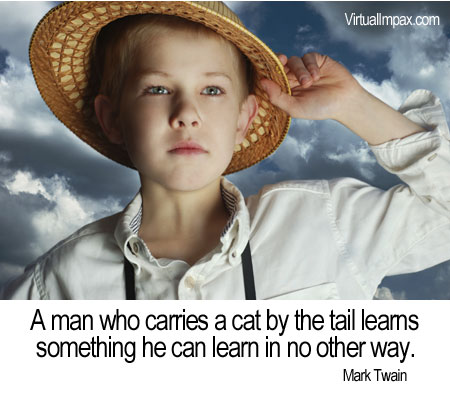
Why Your Business Blog Shouldn’t Act like Other Blogs

December 30, 2010 by Kathy Hendershot-Hurd

Imitation is the sincerest form of flattery – and if you’re considering launching a business blog you might be tempted to imitate some of the top blogs online.  It’s a great strategy to imitate success – but if you do choose to imitate some of the top blogs online – you may very well find yourself wasting a lot of time and energy.

When it comes launching and maintaining a business blog, you have to define your goals carefully.   Long ago, I applauded Liz Strauss when she wrote, “Your business is not your blog.”   Those words of wisdom still apply for the business owner who wants to use a business blog to promote his or her business.

Today there are some blogs which are acting as a “business”.  If a business blog is classified as “marketing” – these blogs would have to be classified as “media channels”.

You’re already familiar with the concept of different channels offering different content through television.  What began as three national channels has exploded into hundreds of channels – each targeting a different demographic. Many of the top blogs have become their own “television network” so to speak.  The primary goal of these blogs is providing entertaining and informative content.  In essence they’re “competing” with other content providers – like the television networks.

In these cases – contrary to Liz’s word’s of wisdom – the blog is the business.  When it comes to this style of blogging – you’ll notice there are lots of ads being displayed.  Those ads are the way those blogs are paying the bills which is why – in these cases – the blog is the business.

In the 8 Week Power Blog Launch – in the first lessons I ask the bloggers to define their blogging goals.  It’s important to define your blogging goals because if you’re going to become a competitor for network television  you’re going to have to take a different approach than the business owner who wants to position his or her blog posts in the path  of prospective customers as they research an upcoming purchase.

Creating your own “network” with your own programming is a huge task – an insurmountable one if you’re trying to do it yourself.  These “network blogs” often employ full tine writers,editors and even advertising sales people.  The content of the blog IS the job.   So while you may be a huge fan of a blog which provides daily content and breaking news – chances are you won’t want to imitate that big time blog when it comes time to launching your business blog.

Instead – you’ll want to adopt the blogging style of writing informative blog posts which are written with the end consumer in mind.  If you’re selling widgets – then your business blog should be filled with articles on all the many amazing uses of widgets around the home or business. When that’s your goal, writing a blog post or two each week is often all you need to build that kind of business blog.

On the other hand, if your blog goal is to compete with Oprah’s new television network – that’s going to require full time effort by a team of talented writers.  You’re going to be churning out content on a daily – in some cases hourly – basis.

This is why you must first define your business blogging goal before you begin blogging.  In many cases, your business blog shouldn’t act like other blogs because it’s goal is not to become the go to source for widespread information rather the goal is for your business blog to provide great information for prospective buyers of your product or service.

Business blogging is a marathon – not a sprint. Keeping the goal in sight is a great way to keep your business blog on track and can prevent you from “burning out” before the race is over.

Succeeding in Social Media

December 17, 2010 by Kathy Hendershot-Hurd

You’ve got a business – and you’d love to find new customers online.  You’ve heard that social media can do that for your business- but you don’t know where to begin.

If that’s where you find yourself, then you must know that there are TWO things you MUST have in place in order to succeed in social media:

You need two – and only two – KEY elements in place to succeed in social media.

1.  You must have a plan.

2. You must be proactive.

First – you must have a solid plan.

I’m not talking about a “social media plan” or even a “social media strategy”. I’m talking about a solid business plan which includes as part of your business’ DNA a DESIRE to serve your customer base.

Social media sucks for the business running a “pump and dump” style business plan.  If you view customer comments as “noise” then chances are your “social media strategy” is going to focus upon making your customers SHUT UP and “kwitcherbitchin”.

The current “trend” appears to be that consumers voices are becoming more easily “heard” online that the many professional marketers.  Google is actively searching for online reviews and including them as part of the Google Places Page – a free page one website which business owners can claim and utilize.

In other words,  the search engines appear to be interested in magnifying the voice of the “little guy” a.k.a. the consumer online.  The wise business owner and CEO will keep this trend in mind as they plan for the future in ALL areas of their business.

Think of social media as a huge cocktail party where the conversations are being etched in stone and run your business accordingly.

Creating a free standing “social media plan” – one that is separate and distinct from the overall business plan – is kind of like a resident of Spokane, Washington  planning a road trip to Miami Beach and buying a map of  Florida to plan the trip.   While that map will help once you’ve actually arrived in Florida- but it’s not going to help you navigate the lower 48 and get you to the Sunshine State border.

The best social media plan is one that is integrated with your other means of customer communication… because that’s what social media is – communication with both existing customers and prospective customers.

Which brings me to the 2nd element needed for success in social media.

You must be proactive – not reactive.

Most humans don’t live proactively.  As a species – we didn’t immediately and universally adopt the habit of wearing seat belts and had to be “legislated” or forced into using them.  Sure, there were a few proactive thinkers who buckled up for safety – but these proactive thinkers were definitely in the minority.

So when I say “you must be proactive” when it comes to social media – that advice assumes you’ve already got a business plan that has customer satisfaction ingrained as part of your business DNA.   Then – being proactive simply means not only listening to consumers but actively ENCOURAGING them to speak positively about your business.  Giving consumers a place to be ‘heard” is a great start -but then the real job is cultivating the positive conversations.

When satisfying your customers is part of your business goals – then listening to your customers becomes a priority.  You want them to come back – you want customers to buy from you again – because you realize that it’s 5-7 times more expensive to acquire a new customer than it is to sell another product to an existing customer – you will eventually realize that listening to your customers is the best way to keep them.

In a recent article over at Mashable…Social Media Success: 5 Lessons from In-House Corporate Teams Amy Mae Elliott  interviewed Kerry Bridge, head of digital media communications, EMEA and global public sector at Dell Computers.    Bridge offers this simple reason for why Dell has been so successful using social media to generate sales for their business:

“Listening to our customers has always been at the heart of what we do.  Dell’s heritage of direct customer connections and online leadership are the seeds of our drive to be a social media success.”

Throughout the article – you’ll see the same “thread” repeated over and over again.

The Social Media Success Formula outlined in that article can be summed up as this:

Strong products + a sincere desire to improve customer experience + a proactive commitment to communicating effectively with consumers = social media success.

I get a lot of inquiries from business owners who want to “get started” using social media to grow their business.  They read stories where a companies like Dell have generated millions of dollars in revenue using the free social media communication service Twitter and they want to tap into that kind of business building social media action for their business.

These business owners are frequently disappointed to learn that the social media strategy is not a “set it and forget it” type of proposition.  While many of the communication tools which are an integral part of social media are “free” – using those tools takes time to learn to use – and they require a significant investment of time on the part of the business owner.  Companies like Dell, Ford and Southwest have teams of social media pros who work full time participating in the social media conversations online.

You may not have the resource to fund a full time social media team dedicated to communicating with consumers- but almost every business can launch a self hosted blog where consumers can come and share their thoughts.  Sure – you have to put forth a bit of effort in crafting those blog posts – and if you do that well then you might have to drudge through spammy comments – but if you’ll invest that limited amount of time into your business blog – you’ll find REAL gold in the authentic comments from actual consumers.

Keys to Success in Business

December 10, 2010 by Kathy Hendershot-Hurd

I absolutely ADORE Denny Hatch.  I subscribed to his email newsletter Denny Hatch’s Business Common Sense YEARS ago and he has yet to disappoint.  Every month he regularly delivers on the promise of “Business Common Sense” promised in his newsletter’s name and continues to generously share his wisdom and experience with his newsletter subscribers.  In each newsletter, he includes Takeaways to consider – and the quote above is from the December issue.

“Your new business can only make money two ways: creating wants and satisfying needs.”  ~Denny Hatch

I talk a lot about your target audience’s GDP – Goals, Desires and Problems.  Goals, Desires and Problems are simply three different types of “needs” that consumers experience.

Assuming you’ve zeroed in on the needs your product or service satisfies – it becomes “easy, peasy – lemon squeezy” to put your business blog to work  outlining the many different ways your product or service can satisfy your target audiences various needs.

When I work one on one with clients – that is the most important and productive work we do – identifying the needs of a particular target audience.

In my book Beyond the Niche: Essential Tools You Need to Create Marketing Messages that Deliver Results I share an example about how three different people can purchase candles and while each is purchasing the same item – each consumer is satisfying a different “need”.  One is purchasing candles for emergency lighting – while another is purchasing candles to create a romantic mood for dinner.  The third is purchasing candles to cover the odor of the family dog.

Even though each consumer is purchasing candles – each is purchasing the candle to satisfy a need.  As you blog for your business, you must keep in mind the need your target audience is seeking to satisfy.

Satisfying needs is easy – creating wants is another story.

Creating “want” is the most difficult task you can ask your marketing campaigns to accomplish.

It’s not done quickly, cheaply – nor easily.

I want to go on the record at this point in saying that it’s possible to create a successful marketing campaign on a shoe-string budget.  Your business blog can be a literal marketing powerhouse which can  do a BEAUTIFUL job of positioning blog posts right in the path of prospective customers and clients who are seeking the solutions your product or service offers –when that product or service is tapping into an existing “want”.

The most successful problem solving products and services don’t need to create an awareness of the problem – they only need to offer a solution.

By the way – if you’re a government – creating a problem is easy.    All you need only to pass a law in order to create problems on a MASSIVE scale.  Fortunately, in America – there’s a ready supply of entrepreneurial minded business owners ready to jump in and make a profit solving those problems.

For most small and medium business owners who don’t possess government’s far reaching problem creating power-it’s far easier to tap into existing wants than it is to try to create a demand.

What wants does your product or service satisfy?   Answering that question is the key to success in business.  The answer to that question can then be put to work – via your business blog – via your Tweets – via your Facebook Page- via your LinkedIn profile – via your  [insert latest social media craze].

Business Blogging: Tools for Marketing

November 29, 2010 by Kathy Hendershot-Hurd

Business blogging is a tool – a tool you can use to promote your business as part of your social media marketing campaign.  However, just like any other tool – your business blogging success depends upon how you use it to promote your business.

Last night – I watched the latest episode of “Iron Chef America” where the winner of Season 3’s “Next Iron Chef” Marc Forgione faced his first challenger in Kitchen Stadium.  It was a twist of fate which allowed me to catch the first episode of the third season of “The Next Iron Chef” and I was instantly hooked.  In the end, Marc Forgione was crowned the champion and this episode of Iron Chef America was the first challenge for the newest Iron Chef.

The challenge of the competition was bell peppers and Forgione demonstrated why he is has been crowned an “Iron Chef”  by making the ingredient the “star” of all five of his dishes.  Meanwhile,  the challenger’s food while exceptionally prepared – failed to make the bell pepper “the star” according to the judges.

Business blogging  is the bell pepper of marketing.

Making an ingredient that is usually a supporting player the “star” of a not just one course – but all five courses in a gourmet a meal is what sets an “Iron Chef” apart.

Business blogging is often the “bell pepper” of marketing – used as a “supporting” player and not the “star” of most marketing strategies. For most marketing strategies- business blogging is an ingredient – sometimes an essential ingredient – but not the “star” of the show.

While it’s enjoyable to watch marketing masters use business blogging in a way that is the equivalent to red pepper sorbet – you first must master the “basics” of business blogging before attempting more “advanced” social media marketing dishes.

I like this analogy because marketing has a LOT in common with cooking.

Most people begin by following recipes created by more experienced cooks.  Faithfully follow a recipe and you can usually achieve edible results.  Epic kitchen disasters are usually the result of “tweaking” the recipe.   You can’t successfully “tweak” a recipe without first understanding the “why” behind an ingredient or a step.   Substituting ingredients may not destroy a dish – skipping a step may not destroy the final outcome- but stepping off the established recipe path without knowing the why behind the directions is usually a recipe for disaster in the kittchen.

Disaster awaits when you tweak without knowing the “why”.

My son has been passionately pursuing sports for the past decade but recently discovered he has a gift for food preparation.  (We watch Iron Chef and he’s seen “real men cook” which has inspired him to try his hand in the kitchen.)  He recently saw a cheesecake featured on the cover of a magazine – and purchased the magazine determined to achieve the same results.

However, even though it was his first cheesecake – and he doesn’t have a lot of experience in the kitchen – he began tweaking the recipe.

The tweaking began when didn’t have one ingredient – instant coffee – so he skipped adding it.  Next he substituted peanut butter candy for the crushed toffee bars.

These two “tweaks”  actually worked well together. The absence of the first ingredient made the substitution of the 2nd acceptable.  It was a “happy” accident and since the “core” ingredients of the recipe were still intact – he was still on the path to a tasty outcome for his efforts.

Then the recipe instructed that he line the spring form pan with foil and he  didn’t want to do that.  He wanted instead “grease the sh*t” out of the pan.  At this point, I stepped in and STRONGLY suggested that this time –  he follow the directions.   Maybe – just maybe – there was a reason WHY the recipe included this step.

Later the recipe called for filling the pan in which the spring form pan was sitting with water to bake the cheesecake.   When the cheesecake emerged from the pan, the reason for the foil became apparent.  Obviously my ancient cookware is not water tight and had he not followed the instructions – his cheesecake would have been ruined.

While substituting and omitting minor ingredients didn’t destroy his creation, the cheesecake was “saved” because he followed a really important step in the directions.  His inexperience in the kitchen however didn’t allow him to recognize the “why” so he could know what could be substituted or skipped and what could not.

Marketing is a lot like that.  There are a lot of “recipes” online for how to achieve success in social media marketing but if you want to create your own recipe variation – it’s important to know the WHY behind what you’re doing.  Begin by following the “recipes” prepared by others… then begin modifying the recipe once you’ve mastered the basics.

I’ve always taken a “teach you to cook” approach when working with clients… and I recently was reminded by a new client that this consulting style is truly “unique”. Digging into the “why” behind what you’re doing is what sets my business blogging tutorials apart from other business blogging “recipes” available.  It’s also what sets my consulting services apart as well.

Not everyone wants to learn to cook – or bake a cheesecake.  After all, you can pick up a cheesecake ready made at the grocery store – often for only a fraction more than the cost of the raw ingredients.  But if you want to some day become an Iron Chef – you’d better know the why behind every step of every dish you create.

If you want to become an “Iron Chef” of marketing your business- you’d also better learn the reasons “why” you’re doing what you’re doing.

What’s your favorite “business blogging” tool or ingredient for success?  Feel free to showcase your Iron Chef business blogging abilities in the comments section below.

  • « Go to Previous Page
  • Page 1
  • Interim pages omitted …
  • Page 6
  • Page 7
  • Page 8
  • Page 9
  • Page 10
  • Interim pages omitted …
  • Page 72
  • Go to Next Page »

Virtual Impax

Copyright © 2026 · Monochrome Pro on Genesis Framework · WordPress · Log in